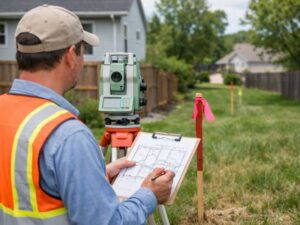

If you hire a drone surveyor, you expect clean maps, solid contours, and coordinates you can trust. Most days, you get exactly that. However, some days feel strange. Your map lines up in one corner, then drifts in another. Your elevations look “almost right,” but not right enough. In those moments, the satellites don’t fail completely. Instead, the signals get noisy.
Lately, that idea has spread outside surveying too. A recent research preprint talked about a “CRASH Clock” and warned that modern systems may have only about 2.8 days to recover from a wide disruption. It even pointed to solar storms as a real trigger. That sounds like space talk, but it hits our world fast—because drones, RTK, and GNSS corrections live and die by reliable signals.
What “noisy satellites” looks like on a job site
People imagine GPS problems as “it works” or “it doesn’t.” In real life, the mess lives in the middle.
On a noisy day, you might see:
- Your RTK fix flips between fixed and float.
- Check points come back high, then low, with no pattern.
- The surface looks smooth until you compare it to known hard points.
- Your map “slides” a bit when you overlay it on design files.
Because of that, clients often blame the drone, the software, or the pilot. Still, the real cause may sit far above the site. Solar activity can disturb the upper atmosphere, and that disturbance can mess with satellite signals and the corrections your workflow depends on.
Why this matters to real projects
This doesn’t just affect “survey nerd” details. It affects money and schedules.
For example, if you build a pad site or a parking lot, inches matter. A small vertical error can change cut/fill numbers. A small horizontal drift can shift a corner, a curb line, or a utility tie-in. Then crews lose time, materials, and confidence.
Even worse, noisy GNSS can create the kind of argument nobody wants:
- “Your map says this slope works.”
- “My machine control says it doesn’t.”
- “The inspector says to fix it.”
So, I don’t treat GNSS quality as background noise. I treat it like a risk I can manage.
My routine starts before I ever launch the drone
I don’t walk onto a site and “hope the sky behaves.” Instead, I decide what level of proof the job needs.
First, I ask one simple question: What will the client do with this data? If the answer involves grading, drainage, staking, or design surfaces, I raise the bar. If the answer involves planning, marketing, or rough layout, I still validate—but I don’t overbuild the process.
Next, I check the conditions. I keep this step quick, but I never skip it on high-stakes days. If I see signs of elevated space weather risk, I plan for extra verification. That doesn’t mean I should cancel work. Instead, I build more guardrails into the workflow.
Then, I choose a control plan that fits the risk:
- I use ground control points to anchor the model.
- I add check points that stay separate from the control points.
- I place points in areas that can expose drift, like corners, grade breaks, and the far edges of the flight area.
That separation matters. Control points help the model fit. Check points tell the truth.
On site, I protect the job from “silent errors”
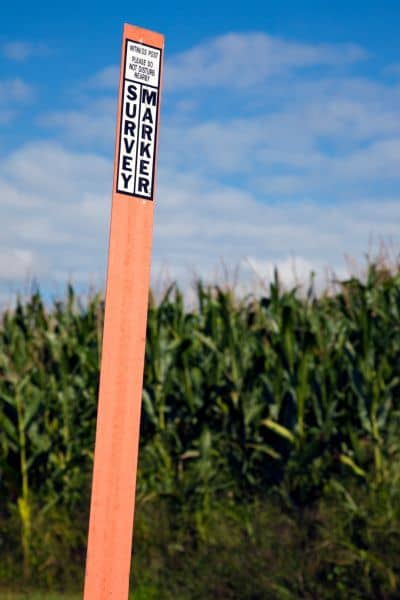
Noisy days feel dangerous because errors can hide. The data can look pretty while it still lands in the wrong place. So, I set up the site like I expect someone to question it later.
I start with a stable setup. I document antenna heights and equipment settings. I confirm the coordinate system and vertical reference the engineer expects. If the client needs a specific datum, I match it exactly. Otherwise, a “perfect” map can still land on the wrong grid.
After that, I take quick reality checks before launch:
- I confirm GNSS status and correction quality.
- I confirm time sync for any PPK workflow.
- I verify point IDs and descriptions so the office work stays clean.
Then, I measure key points more than once when the job demands it. I don’t obsess over every point. However, I re-observe the points that can save the project if something goes sideways. That includes known benchmarks, curb returns, and any hard feature the client will compare against.
During flight, I build redundancy without wasting time
A noisy day rewards smart overlap and smart coverage.
I still fly efficiently, but I add a little insurance:
- I use enough overlap to support a strong solution.
- I run a crosshatch pass on critical areas when I can.
- I break very large sites into blocks if the risk looks high.
Why? Because GNSS noise often comes in waves. If I fly everything in one long stretch, I can trap the whole dataset inside one bad window. On the other hand, if I segment the site, I can isolate problems faster and protect the rest of the deliverable.
Also, I take field notes like a professional, not like a hobbyist. I log anything unusual—signal drops, reboots, sudden changes, or any obstacle that could affect results. Those notes help me troubleshoot later without guessing.
After the flight, I validate before I deliver
This part makes or breaks trust.
I don’t send files the moment the software finishes. Instead, I run a short validation loop that answers one question: Do the coordinates hold up in the real world?
First, I process the data and check residuals against the check points. I don’t “explain away” failures. If check points miss the tolerance the project needs, I stop and fix it. Sometimes the fix looks simple, like re-solving with better settings. Other times, the fix requires a re-observation or even a re-flight.
Next, I compare the model to reality:
- Do hard edges land where they should?
- Do spot elevations match known points?
- Does the surface make sense when I follow drainage paths?
Then, I run a “publish gate.” In plain terms, I don’t release deliverables until:
- check points pass for the job’s purpose, and
- elevations pass sanity checks, and
- overlays align with the design or base files the client uses.
That gate keeps clients from paying for surprises.
When I switch tools instead of forcing GNSS to behave
Here’s the truth: some days don’t deserve a drone-only solution.
If the project needs tight staking tolerances, or if GNSS instability keeps showing up, I shift methods. I might bring in a total station for key features. I might re-observe control later in the day. I might schedule the drone flight for a better window if the timeline allows it.
Clients respect that choice because it protects outcomes. They don’t hire a drone surveyor for “cool tech.” They hire one for reliable answers.
What prospective clients should ask before they hire a drone surveyor
If you want clean data when satellites get noisy, ask these questions:
- “Do you use independent check points, not just control?”
- “Will you include a short QA summary with the deliverables?”
- “How do you handle days when RTK won’t stay fixed?”
- “Can you match my engineer’s coordinate system and vertical reference?”
- “What triggers a re-fly or re-observation on your team?”
Those questions don’t slow the project down. Instead, they prevent expensive rework.
Final thought
Solar storms and crowded space systems sound far away. However, their effects can reach your site faster than you think. The good news: a solid routine makes noisy days manageable.
If you plan a project with real timelines and real budgets—choose drone surveyors who validate the coordinates like the job depends on it. Because it does.