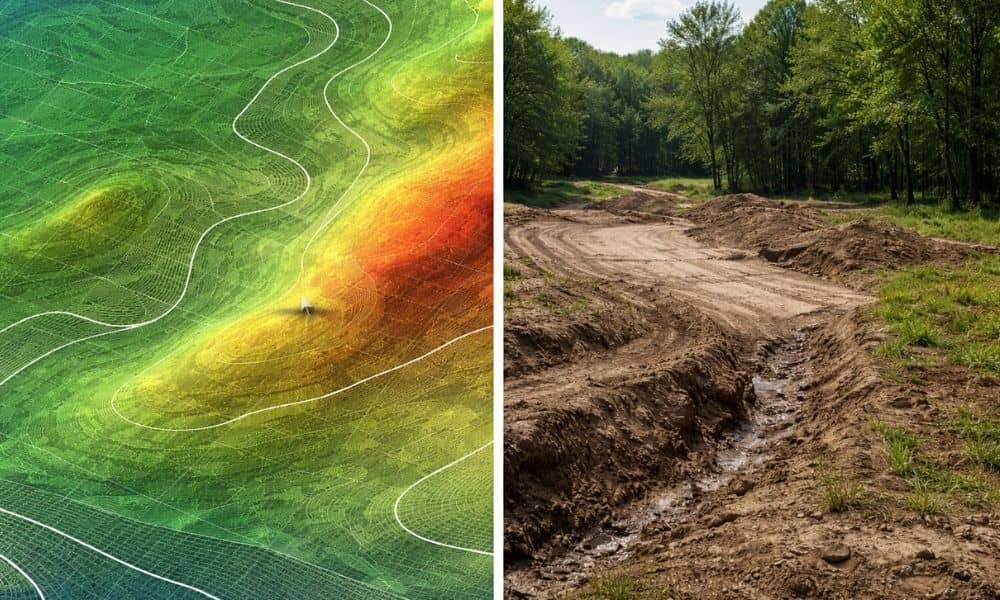
Public LiDAR mapping data is easy to find. A few clicks, and you can see elevation, slopes, and contours for land in Tupelo. Most people come across lidar mapping data for land this way, and it feels like enough to start planning.
It helps at first. You get a quick view of the property, and things look clear and simple.
But that picture can be misleading. It may not reflect what is actually on the ground today. It may miss small details that matter later. And it was never built for your specific project.
That is where people start to run into problems.
What Public LiDAR Mapping Data Really Shows
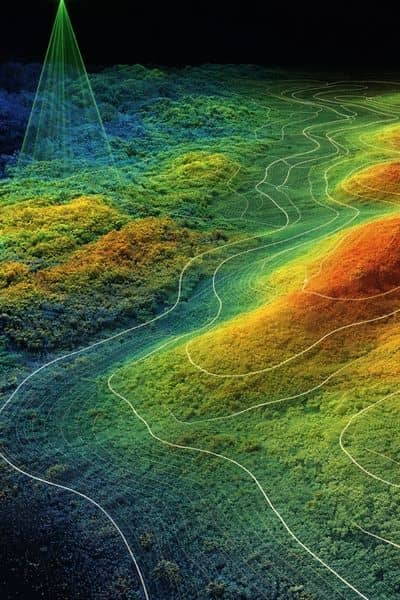
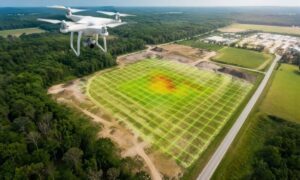
LiDAR mapping works by sending laser pulses to the ground and measuring how long they take to return. The result is a digital model of the land.
Public data takes that model and turns it into maps you can view online. You will usually see elevation, contour lines, and general terrain shape.
That sounds accurate, and in many ways, it is. The issue is timing.
Most public LiDAR mapping data in areas like Tupelo comes from surveys done years ago. So the map shows what the land looked like at that moment, not what it looks like now.
Land changes. Grading happens. Trees get cleared. Soil gets moved. Drainage shifts.
The map does not update itself.
Where Public LiDAR Mapping Helps the Most
Public LiDAR mapping still has real value. It works best when you are early in the process and trying to understand the land.
You might be comparing a few properties. One looks flat, another has a slope. LiDAR mapping helps confirm that without stepping on the site.
You can also spot low areas, high points, and how water might move across the land. That helps you decide if a property is worth a closer look.
At this stage, you are not making final calls. You are just sorting options. For that, public data works well.
Why It Becomes Risky for Real Decisions
The problem starts when people treat public LiDAR mapping as final data.
Old data can hide real changes. A site might have been graded after the scan. Fill could have been added. Drainage paths may have shifted over time.
Even small changes matter. A few inches in elevation can change how water moves across a property, which affects where you build and how you plan the site. Most of the time, that is when people start noticing issues with lidar mapping accuracy.
Public data also smooths out details. It creates a clean surface, but real land is rarely that even. Small dips and rises can disappear in the model.
So the map ends up looking better than what you will actually find on the ground.
Why This Matters for Projects in Tupelo
Tupelo projects rely on accurate land information. Site plans need clear contours, drainage direction, and elevation details.
If your base data is off, the plan can go off with it.
You might design drainage based on the map, then find out later the water flows a different way. That means changes to the plan, added cost, and delays.
Grading is another area where errors show up. If you estimate earthwork from public LiDAR mapping, you might be far off once real measurements come in.
Those surprises rarely happen at the start. They show up when the project is already moving forward.
What People Often Get Wrong
Many property owners assume the data is current because it looks detailed. Clean lines and clear contours give a sense of confidence.
That confidence can lead to early decisions based on incomplete information.
Some people use public LiDAR mapping to plan building locations. Others try to estimate how much dirt needs to be moved. A few even move toward permits without checking the site in detail.
These steps seem reasonable at first. Yet they depend on data that was never meant for that level of use.
What Public LiDAR Mapping Leaves Out
Public LiDAR mapping does not show everything that matters on a site.
It may miss recent grading. It may not reflect erosion or changes after heavy rain. It does not show subtle grade breaks that affect drainage.
It also does not confirm what is happening on the ground today. You cannot walk the map. You cannot see how water sits after a storm. You cannot check if the surface has shifted.
So while the map looks complete, it leaves out details that affect real decisions.
When It Is Time to Move Beyond Public Data
There is a clear point where public LiDAR mapping is no longer enough.
That point comes when the project moves from idea to action.
Once you start planning design, preparing for approval, or getting ready to build, you need data that reflects current conditions.
At that stage, guesses turn into risk. Small errors turn into real costs.
Using LiDAR Mapping the Right Way
Public LiDAR mapping is still a useful tool. The key is knowing its place.
Use it to explore land. Use it to compare options. Use it to understand the general shape of a site.
Then shift to accurate, project-specific data when decisions matter.
That approach keeps things simple. You get the speed of public data early, and the accuracy you need later.
LiDAR mapping works best when you treat it as a starting point, not the final answer.