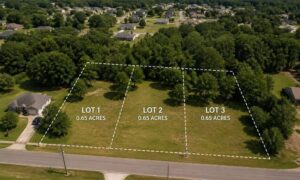
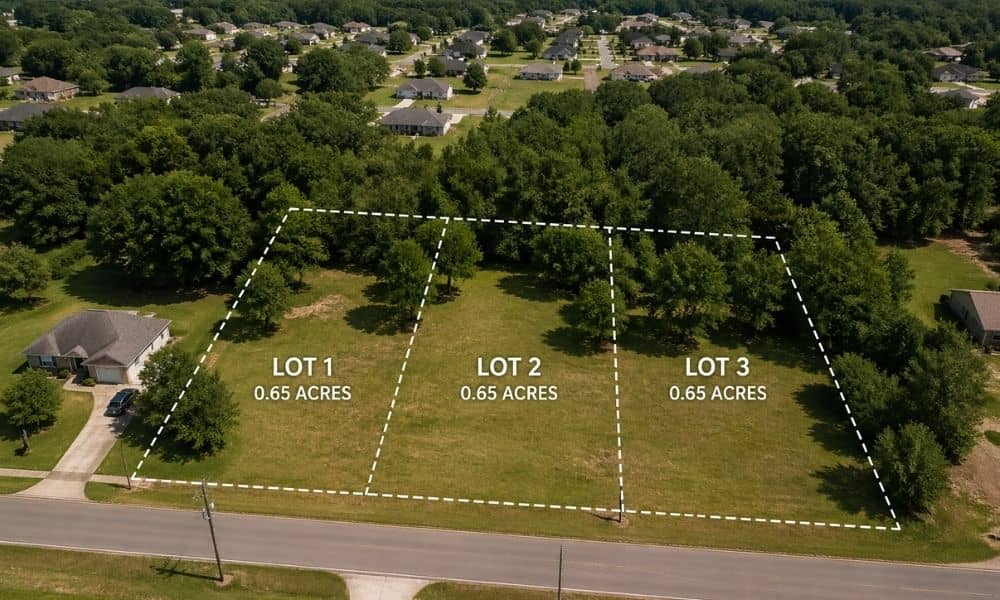
You’ve got extra land. Maybe it sits behind your home. Maybe it came with a bigger parcel than you need. Now you’re thinking about splitting it. Sell one part, build on it, or give it to family.
Sounds simple. Draw a line, right?
Not even close.
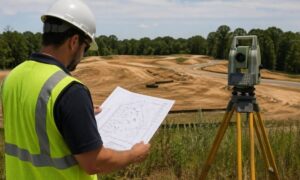
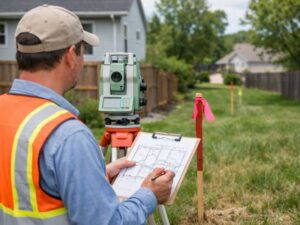
Before anything moves forward, surveying companies go through a full check. They look at records, rules, and real conditions on the ground. Skip this step and you risk delays, rejected plans, or land that no one can use.
Why Some Land Can’t Be Split
First, not every property qualifies.
Cities and counties set the rules for how land gets divided. Tupelo has its own. Some areas allow smaller lots, while others don’t. Some require more road access, and others limit how many splits you can make.
So even if your land looks big enough, it can still fall short on paper.
At this point, most people start wondering what to check before splitting land. That’s where surveying companies come in. They look at the basics first, so you don’t spend time or money on plans that won’t move forward.
Property Records and Legal Description
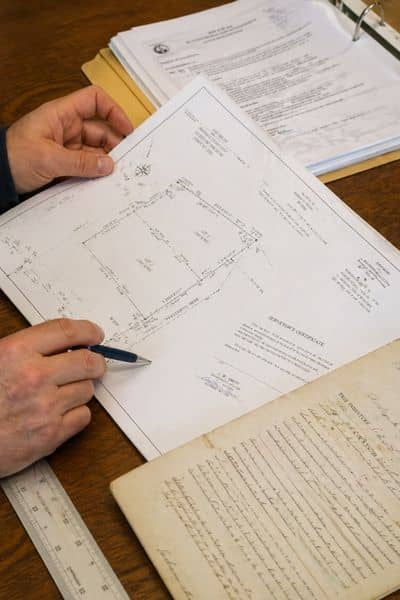
Next comes the paperwork.
Surveying companies review your deed, past surveys, and recorded plats. These documents describe your land in legal terms. Lines, angles, distances. All of it must match reality.
Problems show up often. Old records don’t always line up with what’s on the ground. Lines may overlap. Corners may be unclear.
If the legal description has issues, the split stops right there.
You can’t divide land if no one agrees where it begins or ends.
Lot Size and Shape Rules
Now let’s talk about size.
Every new lot must meet local standards. That includes total area, width, and depth. You can’t create a narrow strip and call it a lot. You can’t carve out a piece that’s too small to build on.
Shape matters too. A weird triangle or a long, thin section may not pass review.
Surveying companies check your layout early. They adjust the lines so each lot meets the rules.
Without that step, your plan gets rejected.
Road Access for Each Lot
This one stops a lot of projects.
Each new parcel must have legal access to a road. Not just physical access. Legal access.
That means:
- Direct frontage on a public road
- Or a recorded access easement
If you split land and create a back lot with no access, the city won’t approve it.
A lot of owners run into this when trying to split off land behind their home. It looks usable, but without legal access, it can’t move forward.
Surveying companies check this early. They look at how each lot connects to a road and whether that access meets local rules.
No access, no approval. It’s that simple.
Easements That Limit Your Layout
Easements run through more properties than most owners realize.
They allow others to use part of your land. Utilities, drainage, or shared driveways often sit inside these areas.
You can’t just ignore them.
Surveying companies locate and map these easements. Then they design lot lines around them. In some cases, easements take up space that could have been part of a new lot.
That changes everything.
A split that looked clean at first may no longer work once those limits show up.
Setbacks and Buildable Space
Even if a lot meets size rules, it still needs usable space.
Setbacks control how close a structure can sit to the edges of a property. Front, side, and rear setbacks all apply.
Surveying companies check if each new lot has enough buildable area after setbacks are applied.
A lot may be large enough, but still too tight to build on once those limits are in place.
That turns a “valid” lot into a useless one.
Better to catch that early.
Terrain and Land Layout
Not all land splits make sense in real life.
Surveying companies look at how the land sits. Slopes, dips, and natural features all matter. A steep section may not work for a home. A low area may hold water.
They adjust lot lines to fit how the land actually works.
This keeps you from ending up with lots that look fine on paper but don’t work in real use.
Utilities for Each New Lot
Each parcel needs basic services.
Water, sewer or septic, and power must be available or possible. Surveying companies review how each lot can connect to these services.
A lot without utility access may not be approved. Even if it passes other checks, it still needs to support a home or building.
This step protects you from ending up with land that can’t be used.
Existing Structures on the Property
Now look at what’s already there.
Homes, sheds, driveways, and fences all affect how land can be split. Surveying companies map these features and make sure new lot lines don’t create problems.
For example:
- A house can’t sit too close to a new property line
- A driveway may need to serve more than one lot
- A structure may end up on the wrong side of a split
These issues show up fast once measurements begin.
Fixing them later costs more.
Local Approval in Tupelo
After all the checks, the plan still needs approval.
Tupelo reviews land splits through its planning process. Even smaller divisions often go through a minor subdivision review.
Surveying companies put together the drawings for submission. These plans have to match local standards, or they get sent back. In most cases, it comes down to what surveying companies check before land is split, since the city looks at those same details during review.
That back-and-forth can drag out the timeline.
Getting it right the first time can save you weeks, sometimes even months.
When to Call Surveying Companies
Timing matters.
Call early. Before you list land. Before you draw plans. Before you promise anything to a buyer.
Surveying companies help you see what works and what doesn’t. They adjust the layout before it becomes a problem.
Waiting too long leads to changes, delays, and extra cost.
Splitting land sounds simple until the details show up.
That’s usually when people realize they needed a survey from the start.