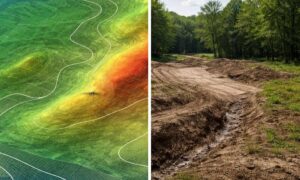
Heavy rain can make property surveys cost more money in Mississippi and across the Gulf Coast. When water fills the soil, hides survey markers, and creates new water flow patterns, surveyors have to change how they work and how long the job takes. This means your survey costs more than you expected. Understanding why this happens helps you plan your budget better and decide when to order a survey after bad storms.
Saturated Ground Can Slow Fieldwork More Than Property Owners Expect
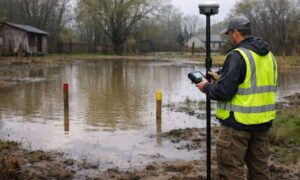
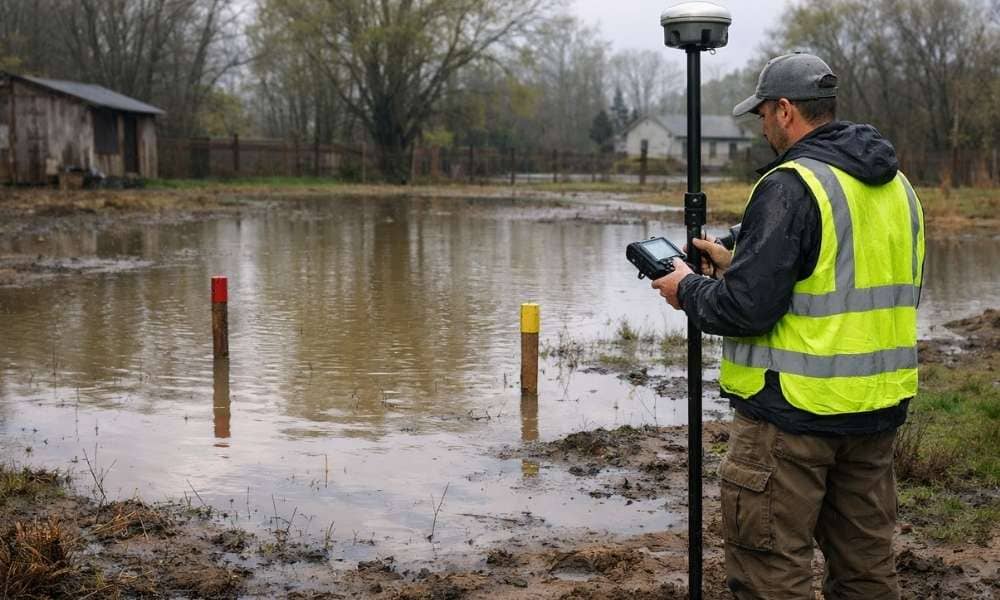
Wet soil creates real problems for surveyors. Surveyors need to place equipment like GPS units on solid ground. When soil is full of water, the ground becomes soft and muddy. Crews have to move slowly and carefully. It’s harder to find the markers that show property lines. Safety becomes very important.
A normal property survey takes one day. After heavy rain, the same survey often takes two or more days to finish.
Here’s why: Surveyors walk around the property edges to find markers, fences, and boundaries. The wet ground is soft. The equipment can sink or get damaged. Crews must walk around standing water and mud. This takes extra time. They have to be very careful where they step and where they place equipment.
In areas near Picayune, Mississippi, and other Gulf Coast towns, wet soil happens a lot after storms. Studies show that wet soil can make surveys take 30 to 50 percent longer. When surveyors can’t safely reach parts of your property, they have to come back another day when it’s drier.
This matters for your wallet. More visits mean more money. Equipment must be driven to your property again. Workers spend more hours on one project.
Property owners often think they pay one price. Then surveyors ask for more money for extra visits. This happens because the ground got wet and changed how long the work takes.
Flood Debris and Washed-Out Evidence Create Extra Research Work
Heavy rain does more than slow down workers. It destroys the physical evidence surveyors need.
Floods move fences. Survey markers get buried under mud and trash. Property corners disappear under fallen trees or dirt. A marker that was easy to see before is now hidden.
When surveyors can’t find the physical markers, they must do research work. They spend hours looking at old deeds and old maps. They compare documents. They check county records and previous surveys. They try to figure out where the property lines should be.
This research takes time. Time costs money.
Imagine a flooded property where a marker gets washed away. The surveyor can’t find it. Instead of finishing quickly, the work moves to an office. Staff members must read old deeds from many years ago. They look at old maps. They verify property lines using old records and information from neighbors’ properties.
The verification work protects you and the surveyor. Nobody wants a survey based on guessing. The extra research makes sure the answer is correct. But it costs more money.
Insurance companies sometimes require this detailed work after floods. Banks require complete records before approving loans. A simple survey becomes a big investigation. These requirements exist for good reasons. They protect everyone.
Temporary Water Patterns Can Reveal Problems That Affect Survey Scope
Standing water shows surveyors important things about your land. Drainage problems show up clearly after rain. Unexpected water channels appear. Water flows in ways you didn’t notice before.
Developers planning new construction may not see these patterns when the ground is dry. After heavy rain, the property looks different. It reveals new information.
A developer hires a surveyor to plan where buildings will go. During the survey, standing water reveals a drainage problem. The surveyor writes about this in their report. Now the developer needs more survey work: checking water flow, looking for wetlands, or checking if the soil is stable for building.
This extra work costs more money. But it stops big building problems later that could ruin your project or create problems.
Developers should expect this to happen. Heavy rain reveals what will happen in future storms. A property with hidden water problems becomes risky for building.
When surveyors find these problems, they suggest more services. Water flow mapping. Slope surveys for drainage. Erosion studies. Each service costs more but gives you important information for safe building.
Why Survey Scheduling Becomes More Competitive After Regional Flooding
After big storms, many people need surveys at the same time. Schedules get very busy.
Homeowners need surveys for insurance claims. Contractors need them before fixing damage. Banks need them before approving disaster loans. Buyers want surveys before purchasing flooded land. Developers need them before building.
Surveyors get flooded with requests. Their calendars fill up for weeks or months. The entire surveying industry gets very busy.
When many people want surveys and there aren’t enough surveyors, prices go up. Some surveyors charge more money. Others choose which jobs to do first based on how urgent they are. Emergency jobs cost more.
Developers may have to wait longer or pay extra for faster service. A survey next week might cost 15 to 25 percent more than a survey planned three months ahead.
After big Gulf Coast floods, surveyors work very hard. Crews work extra hours. Equipment stays on trucks between jobs instead of going back to the office. This hard work costs more money for customers.
Understanding this helps you negotiate better prices. Planning ahead gives you more power to negotiate. Flexible timing lets you save money.
The Best Time to Order a Property Survey After Heavy Rain
When you order your survey matters for your budget.
If you’re buying property after a flood: Get a survey before you buy it. Don’t skip this. Floods create questions about your property. A survey before you buy protects your investment and shows hidden problems.
If you’re planning to build: Wait one to two weeks after the rain stops. This gives the ground time to dry out. Surveyors can work faster. Costs stay lower.
For insurance surveys: Order it quickly. Insurance companies have deadlines. Waiting costs you money in your claim.
For bank loans: Ask your bank about timing. Some banks accept surveys a few days after floods. Others want you to wait until the ground dries.
For buying property: Order the survey right after you make an offer. Don’t wait weeks. Delays could cause you to lose the property deal.
For building planning: You have more time to wait. If construction is months away, wait for slower times. Surveyors charge less during quiet periods.