
Land surveying plays an important role in property development and construction. It also helps define land ownership. Surveyors measure land so people know where boundaries and features are located. In the past, this work took a long time. Survey crews walked across large areas of land. They measured points one by one and recorded the results. This method still works today. However, new tools now help surveyors work faster. One of the biggest changes in the industry is drone land surveying.
Today, many surveyors use drones to map land from the air. These small aircraft capture images of the ground below. They also record terrain data across large areas.
Because of this technology, surveyors can collect information much faster. Property owners and developers can receive land data sooner. This helps projects move forward with fewer delays.
What Drone Land Surveying Actually Does
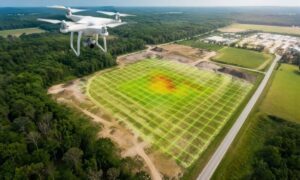
Drone land surveying uses unmanned aerial vehicles to collect mapping data. These drones carry cameras or special sensors. During a flight, the drone follows a planned path over the land.
While flying, the drone captures hundreds of photos. Each image overlaps the next. This overlap helps software connect the images together.
After the flight, surveyors upload the photos into mapping software. The software combines the images into a detailed aerial map.
The program can also build a three-dimensional model of the land. This model shows elevation changes and terrain features.
Because of this process, surveyors can see the property from above. They can also measure distances and elevation across the site.
This wide view helps surveyors understand how the land is shaped. They can identify slopes, flat areas, and natural features more easily.
Why Drone Land Surveying Is Faster for Large Properties
One of the biggest advantages of drone land surveying is speed.
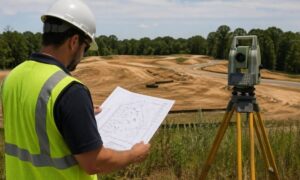
Traditional surveys often require crews to walk the entire property. If the land is large, this work can take several days.
Drones make the process much faster.
A single flight can capture hundreds of acres in a short time. The drone records images while moving across the property.
Surveyors still review the data carefully after the flight. They also confirm measurements when needed. However, the first step of mapping now happens much faster.
This speed helps many property owners.
Large rural properties are a good example. Farmland and wooded land often cover many acres. Walking across these areas takes time.
Drones can capture the same information much faster. As a result, surveyors complete projects sooner.
Because of this, landowners can move forward with their plans earlier.
Better Accuracy Through Aerial Mapping
Speed is important in surveying. However, accuracy is even more important.
Fortunately, drone land surveying also improves accuracy.
Drone cameras capture detailed images of the ground. These images show small features across the terrain.
Surveyors combine the images to create accurate maps. The software calculates thousands of mapping points across the property.
These points build a digital model of the land surface.
Surveyors also place control points on the ground. These markers help connect the drone data to real coordinates.
Because of this step, the final map stays accurate and reliable.
Builders and engineers rely on these models before construction begins.
How Drone Land Surveying Supports Topographic Mapping
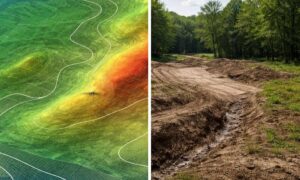
Topographic maps show how land rises and falls. These maps also show slopes and drainage paths.
Builders need this information before construction begins. Without it, they may face problems later.
Drone land surveying helps create these maps faster.
Instead of measuring only a few points on the ground, drones collect thousands of points across the site.
Surveyors use this data to create contour maps. These maps show hills, slopes, and low areas.
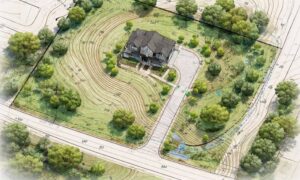
Engineers then use the maps to design grading plans. They also plan drainage systems.
Because of this information, builders can prepare the site correctly.
Property owners also benefit. Early mapping helps avoid expensive changes later.
Why Developers Use Drone Mapping Before Construction
Developers must understand land before starting a project.
They need to know where roads, buildings, and utilities will go. They also need to study slopes and drainage areas.
Drone land surveying helps provide this information early. For many projects today, developers rely on survey teams that use drone land surveying services to capture accurate aerial maps of the property.
For example, a developer planning a subdivision needs a clear view of the site. Drone maps show the entire property from above. Surveyors can see hills, valleys, and open areas.
With this information, engineers design roads and infrastructure more easily. Commercial builders also use drone mapping to study building sites before construction begins.
Because drone surveys capture the entire property, planners can see the full layout of the land.
Drone Land Surveying and Traditional Surveys Work Together
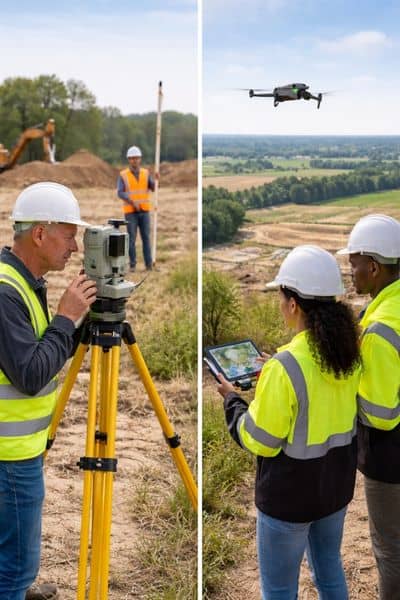
Drones do not replace traditional surveys. Instead, they work together.
Drones collect aerial data quickly. Ground crews still measure important points on the property.
Surveyors compare the drone data with field measurements. This step confirms accuracy.
Licensed professionals then review the results.
This combined approach provides both speed and reliability.
As a result, clients receive accurate land information in less time.
The Role of a Licensed Land Surveyor
Technology cannot replace professional expertise. Even with drones, a licensed land surveyor must review the data. Surveyors understand property boundaries and land records. They also follow strict measurement standards.
The surveyor checks the aerial data carefully and confirms that the map matches the legal property description. Licensed professionals also make sure the survey follows state regulations.
Because of this, experienced land surveying professionals remain essential. They review drone data carefully and make sure the final results stay accurate and reliable.
When Property Owners Benefit from Drone Land Surveying
Many property owners now request drone land surveying.
Large rural properties benefit the most. Drones can map wide areas quickly.
Land buyers also use drone surveys. These maps help them understand terrain before purchasing land.
Builders rely on aerial maps during construction planning. Developers also use drone data when planning subdivisions.
In each case, drone land surveying provides clear information about the land.
This helps people make better decisions about their property.
A Faster Future for Property Mapping
Surveying continues to evolve as technology improves.
Today, drone land surveying helps professionals map land faster than before.
Drones collect aerial images and terrain data across large areas. Surveyors use this information to study land conditions quickly.
Property owners receive results sooner. Developers also gain a clearer view of the land before building begins.
However, technology works best with professional knowledge.
Licensed surveyors guide the process and confirm accuracy.
In the end, drone land surveying helps surveyors map land with greater speed and clarity.
For property owners and developers, this means better information and smarter decisions before any project begins.