
Buying property is a major decision. Whether you are purchasing vacant land, a commercial site, or property meant for future development, early mistakes can become expensive problems later. That is why many buyers rely on a due diligence survey. Still, confusion remains around when it is truly required and when it may not be necessary.
What a Due Diligence Survey Really Is
A due diligence survey is not a single survey type. Instead, it is a survey ordered to reduce risk before a property transaction becomes final. Its purpose is simple: confirm that the property matches what the buyer believes they are purchasing.
Rather than relying on old plats or assumptions, a due diligence survey examines real conditions on the ground. It reviews boundaries, access, visible improvements, and conflicts that could affect value or future use. Because of this, it is often ordered during the inspection or contract review period.
At its core, a due diligence survey answers one question: are there issues that could change this deal?
When a Due Diligence Survey Is Required
In many cases, a due diligence survey is not optional. Instead, it is required by lenders, title companies, or other parties involved in the transaction.
Commercial property purchases almost always require a due diligence survey. Lenders and title companies depend on survey data to confirm boundaries, access, and potential encroachments. Without this information, financing can stall or fail.
Properties involving financing or refinancing also commonly require a due diligence survey. Banks need to confirm that the property used as collateral has no boundary conflicts or access issues. Even when refinancing, lenders may request an updated survey if conditions have changed.
Land intended for development is another situation where a due diligence survey is critical. Before design or permitting begins, boundaries, access points, and existing site features must be verified. Skipping this step often leads to redesigns, delays, or permit denials.
Vacant land transactions also carry higher risk. Boundaries may be unclear, access may be missing, and encroachments often go unnoticed. In these cases, a due diligence survey may be the only way to confirm what is actually being purchased.
When a Due Diligence Survey Is Not Always Required
Not every property transaction legally requires a due diligence survey. However, “not required” does not mean “risk-free.”
All-cash residential purchases are one example. Since no lender is involved, a survey may not be required. Even so, this decision places all risk on the buyer. Boundary issues discovered later remain the buyer’s responsibility.
Family transfers or internal ownership changes may also proceed without a due diligence survey. These transactions often feel low risk because the parties know each other. Still, boundary issues, access problems, and encroachments do not disappear just because ownership changes.
Recently surveyed properties may not require a new due diligence survey. However, this only applies if the survey is truly recent and site conditions have not changed. New fences, additions, or nearby development can quickly make an older survey unreliable.
The Risk of Skipping a Due Diligence Survey
Many buyers skip a due diligence survey to save time or money. Unfortunately, this choice often leads to larger costs later.
Boundary disputes are one of the most common issues. Once a transaction closes, resolving these disputes becomes more difficult and more expensive.
Access problems also surface frequently. A property may appear accessible but lack legal access. Without a due diligence survey, this issue may only be discovered when permits are denied.
Encroachments create another risk. Driveways, buildings, or utilities crossing property lines can lead to legal disputes or title complications. Fixing these issues after closing usually costs far more than identifying them early.
What a Due Diligence Survey Typically Reviews

While the scope depends on the property, a due diligence survey typically focuses on factors that affect ownership and use.
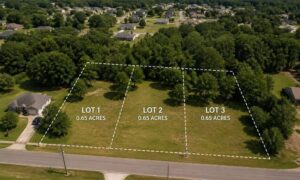
First, it confirms boundary lines and acreage. This step ensures the legal description matches actual conditions on the ground.
Next, it reviews access points and visible easements. These features directly affect how the property can be used or developed.
It also identifies visible encroachments such as fences, structures, or pavement crossing property lines. Identifying these early helps avoid disputes later.
Finally, the survey connects physical site conditions with title information. This allows buyers, lenders, and attorneys to make informed decisions before closing.
Who Decides If a Due Diligence Survey Is Needed
Several parties influence whether a due diligence survey is required. Lenders often make the decision when financing is involved. Title companies may also require a survey to remove title exceptions.
Attorneys frequently recommend surveys during contract review to reduce legal risk. However, buyers should not rely solely on others to make this call.
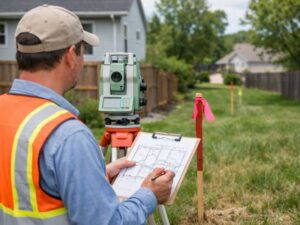
Consulting a licensed land surveyor early in the process helps clarify what level of due diligence is appropriate for the property.
How to Know What Level of Due Diligence You Need
Not every property requires the same level of review. Asking the right questions early makes the process clearer.
Is the property vacant or improved? Is financing involved? Is development planned? Has the land been surveyed recently?
Answering these questions early allows the surveyor to tailor the due diligence survey to the actual risk involved. As a result, buyers avoid unnecessary delays and unexpected costs.
Final Thoughts:
A due diligence survey is more than a formality. It is a risk management tool that protects buyers before money changes hands.
While some transactions may not require a survey, skipping one always means accepting greater risk. In most cases, that risk outweighs the cost savings.
When uncertainty exists, speaking with a licensed land surveyor early helps prevent expensive surprises after closing.