
Mississippi continues to attract new development. Across the state, investors look for land for factories, warehouses, tech sites, and new business spaces. As a result, communities often hear about these projects once companies announce them. But the real work starts much earlier. Before developers commit to a project, they spend months studying possible sites. They need to make sure the land can support their plans and check whether roads, utilities, and building layouts will fit. That’s why they begin with early land evaluation, which often includes ordering a due diligence survey.
A due diligence survey gives investors a clear picture of the property before they spend millions on a project. It helps them understand the land’s possibilities, spot potential challenges, and plan smarter from the start.
Development Projects Start Long Before Construction
When people see construction crews moving equipment onto a property, the project has already passed through many planning stages. Long before that, developers spent weeks or months studying different sites.
First, they look at market demand. Then, they narrow down land that could actually work for the project. After that, engineers, planners, and surveyors start taking a closer look at each site.
At this point, developers rely on careful survey and site evaluation. This step helps them understand how the property is laid out, where trucks can enter and exit, and whether roads, utilities, and buildings can fit safely.
They need this information before moving forward. Without it, they might pick a site that seems fine on paper but can’t handle the project in real life. For example, a warehouse needs enough space for trucks to come and go easily, and planners need to see exactly where buildings and roads can be placed.
Having solid survey data at this stage takes the guesswork out of planning and helps the project move more smoothly from idea to reality.
Developers Need to Understand the Land First
Every piece of land is different. Some properties work well for development. Others bring challenges that slow projects down.
Because of this, developers study land carefully before they announce a project.
A due diligence survey helps them review the site in detail. It provides measurements and site information that engineers and planners need during early planning.
For example, developers often study:
- the shape of the property
- how the land connects to nearby roads
- where buildings might fit on the land
- how future roads or utilities may be placed
These details help investors decide whether the land fits their plans.
As a result, a due diligence survey often plays an important role during early site study.
Land Conditions Can Shape an Entire Project
Land may look perfect on maps or online images. However, real conditions on the ground can tell a different story.
Even small land changes can affect how a project moves forward.
For example, a property may appear large enough for a facility. Yet once engineers study the site, they may find that some areas cannot support construction.
Because of this, developers rely on accurate land information early in the process.
A due diligence survey helps reveal the true layout of the land. With this information, project teams can adjust their plans before making expensive decisions.
In many cases, early survey data helps avoid costly changes later.
Survey Data Helps Engineers and Planners Design the Site
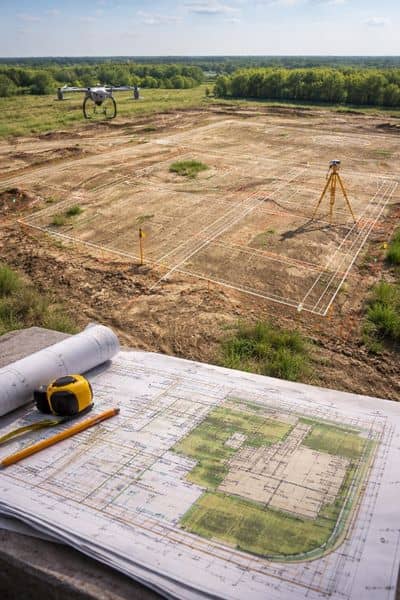
Once developers believe a property may work for a project, engineers start early design ideas. At this point, survey data becomes even more helpful.
Engineers use survey information to see how the project may fit on the land. For example, they study how buildings, roads, and parking areas might sit on the property.
In addition, planners look at how the development connects to nearby areas.
They often review:
- road entry points
- nearby infrastructure
- possible building locations
- room for future growth
Because survey data gives exact measurements, design teams can create realistic site plans.
As a result, a due diligence survey helps turn a development idea into a workable site plan.
Mississippi Land Often Needs Careful Review
Land across Mississippi can vary a lot from one area to another. Some properties include large rural land. Others sit near busy highways or growing towns.
Because of this variety, developers do not rely on maps alone.
Instead, they study sites closely before moving forward with a project.
A due diligence survey helps explain how the land is arranged and how it may support development. It also helps project teams see how the site fits with nearby properties.
In many cases, early survey work helps investors decide if a property is worth further planning.
Early Survey Work Supports Better Investment Decisions
Large development projects require major investment. Because of this, investors want confidence before they buy land or move forward with construction.
For that reason, developers collect as much information as possible during early planning.
Survey data helps them decide if a property supports the project goals. It also helps engineers understand how the land may shape the design of the project.
With clear site information, investors can move forward with greater confidence.
Because of this, a due diligence survey often becomes one of the first technical steps when studying a new project site.
Understanding the Land Before Development Begins
Major development projects bring attention to Mississippi communities. They create jobs, bring investment, and support local growth.
However, before these projects reach the public stage, professionals spend months studying possible sites.
During that early process, developers must confirm that the land can support the project they want to build.
A due diligence survey helps provide the land information needed to make those decisions.
By understanding the land first, developers can plan smarter projects, avoid costly surprises, and move forward with greater confidence when Mississippi’s next big development opportunity appears.